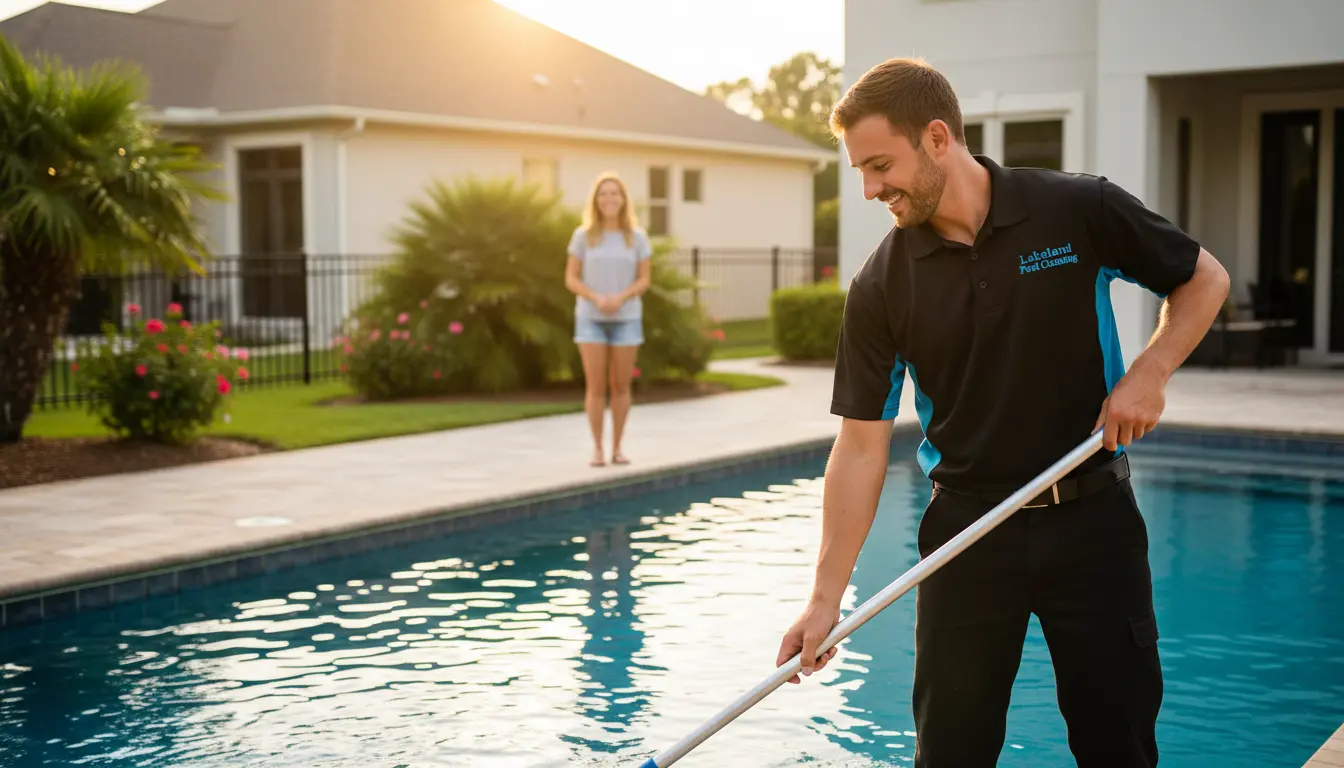
As a pool owner in Lakeland, Florida, you’re likely no stranger to the frustration of dealing with a green, algae-filled pool. Not only is it an eyesore, but it can also be a health hazard, harboring bacteria and other microorganisms that can cause recreational water illnesses. In fact, the Centers for Disease Control and Prevention (CDC) estimates that each year, thousands of people get sick from swimming in contaminated pools. The cost of neglecting your pool’s maintenance can be steep, with some homeowners facing bills of $1,000 or more to restore their pool to a safe and healthy state.
At Lakeland Pool Cleaning, we’ve seen firsthand the importance of regular, professional pool maintenance. Our team of certified pool operators (CPOs) has years of experience in keeping pools clean, safe, and beautiful. We understand the unique challenges that come with maintaining a pool in Central Florida, from the high summer heat to the frequent thunderstorms that can dilute chemicals and alter pH levels.
That’s why we’re committed to providing the best possible service to our customers. Our urgent pool cleaning services are designed to get your pool back to its sparkling best, quickly and efficiently. We use only the latest equipment and techniques, including commercial-grade vacuums, DPD test kits, and telescopic poles, to ensure that your pool is clean, safe, and healthy.
Technical Process
So, what exactly is involved in a typical pool cleaning service? At Lakeland Pool Cleaning, our process begins with a thorough inspection of your pool and its surroundings. We check for signs of algae growth, calcium scaling, and other issues that can affect the health and safety of your pool. Next, we skim the surface of the pool to remove any floating debris, and then brush the walls and floor to remove any dirt or algae that may be clinging to the surfaces.
After that, we vacuum the pool to remove any dirt or debris that may have accumulated on the bottom. We also check and clean the skimmer and pump baskets, and perform a series of tests to determine the pH, alkalinity, and calcium hardness of the water. Based on these test results, we add the necessary chemicals to balance the water and prevent future problems.
Finally, we check the filter and perform any necessary maintenance, such as backwashing or replacing the filter media. We also inspect the pool equipment, including the pumps, heaters, and valves, to ensure that everything is in good working order.
Data Comparison Table
So, how does professional pool maintenance compare to DIY pool care? Here’s a comparison of the two:
| Feature/Metric | Professional Pool Maintenance | DIY Pool Care |
|---|---|---|
| Chemical Accuracy | Highly accurate, with regular testing and adjustment | Less accurate, with potential for over- or under-dosing |
| Time Investment | Low, with regular scheduled maintenance | High, with daily or weekly testing and adjustment |
| Long-term Equipment Lifespan | Longer, with regular maintenance and inspection | Shorter, with potential for neglect or misuse |
Source: PHTA Reference Guide
Expert Insights
As a CPO, I’ve seen many homeowners make mistakes that can cost them time, money, and even their health. Here are a few tips to help you avoid some of the most common mistakes:
First, make sure to optimize your pump run times for the Florida summer. This means running your pump during the hottest part of the day, when the sun is highest in the sky, to help reduce the growth of algae and other microorganisms.
Second, keep an eye on your phosphate levels. Phosphates can contribute to the growth of algae, so it’s essential to keep them in check. You can do this by using a phosphate remover, or by adjusting your chemical dosing to account for the presence of phosphates.
Third, brush your pool surfaces regularly. This will help remove any dirt or algae that may be clinging to the surfaces, and will also help to prevent the growth of calcium scaling.
Pricing
So, how much does professional pool maintenance cost? At Lakeland Pool Cleaning, we offer a range of pricing options to fit your needs and budget. Here are a few examples:
- Weekly full-service rates: $100-$200 per week, depending on the size of your pool and the frequency of service
- Chemical-only plans: $50-$100 per month, depending on the size of your pool and the type of chemicals used
- Fixed rates for specific services: $200-$500 for green pool recovery, $100-$300 for filter cleaning, and $50-$100 for acid washing
Factors that can influence the cost of pool maintenance include the size of your pool, the type of equipment you have, and the frequency of service. We also offer discounts for long-term contracts and referrals, so be sure to ask about those when you contact us.
Safety & Standards
At Lakeland Pool Cleaning, we’re committed to providing safe and healthy pool maintenance services. We use only EPA-approved sanitizers and follow all safety protocols to ensure that our technicians are protected, and that your pool is safe for swimming.
We’re also certified by the PHTA, and our technicians are trained to follow all safety guidelines and protocols. We understand the importance of preventing recreational water illnesses, and we take every precaution to ensure that your pool is clean, safe, and healthy.
FAQ
What is the difference between a saltwater system and a traditional chlorine system?
A saltwater system uses a saltwater chlorine generator to produce chlorine, whereas a traditional chlorine system uses liquid or tablet chlorine. Saltwater systems are generally considered to be safer and more convenient, as they produce a steady stream of chlorine and don’t require the handling of harsh chemicals.
How often should I clean my pool filter?
The frequency of filter cleaning will depend on the type of filter you have, as well as the size of your pool and the amount of use it gets. As a general rule, you should clean your filter every 1-3 months, or as recommended by the manufacturer.
What is the best way to remove algae from my pool?
The best way to remove algae from your pool will depend on the type and severity of the algae growth. Generally, it’s best to use a combination of algaecide and chlorine, along with regular brushing and vacuuming to remove any dead algae. It’s also important to identify and address the underlying cause of the algae growth, whether it’s a lack of circulation, improper chemical balance, or something else.
Can I use a robotic pool cleaner to clean my pool?
Yes, robotic pool cleaners can be a great option for cleaning your pool. They’re generally more efficient and effective than traditional suction-side cleaners, and can help to reduce the amount of time and effort required to keep your pool clean. However, it’s still important to regularly inspect and maintain your pool, as robotic cleaners may not be able to reach all areas or remove all types of debris.
Professional Pool Care in Lakeland
In conclusion, maintaining a clean, safe, and healthy pool is crucial for any homeowner in Lakeland, Florida. At Lakeland Pool Cleaning, we’re committed to providing the best possible service to our customers, with a focus on safety, quality, and convenience. Whether you need a one-time cleaning or ongoing maintenance, we’re here to help. Contact us today to learn more about our services and to schedule your appointment.